
Reveni Labs Lumo Light Meter Review
30 Sep 2026, Posted by in Art, Design, Life, Newsletter, Reviews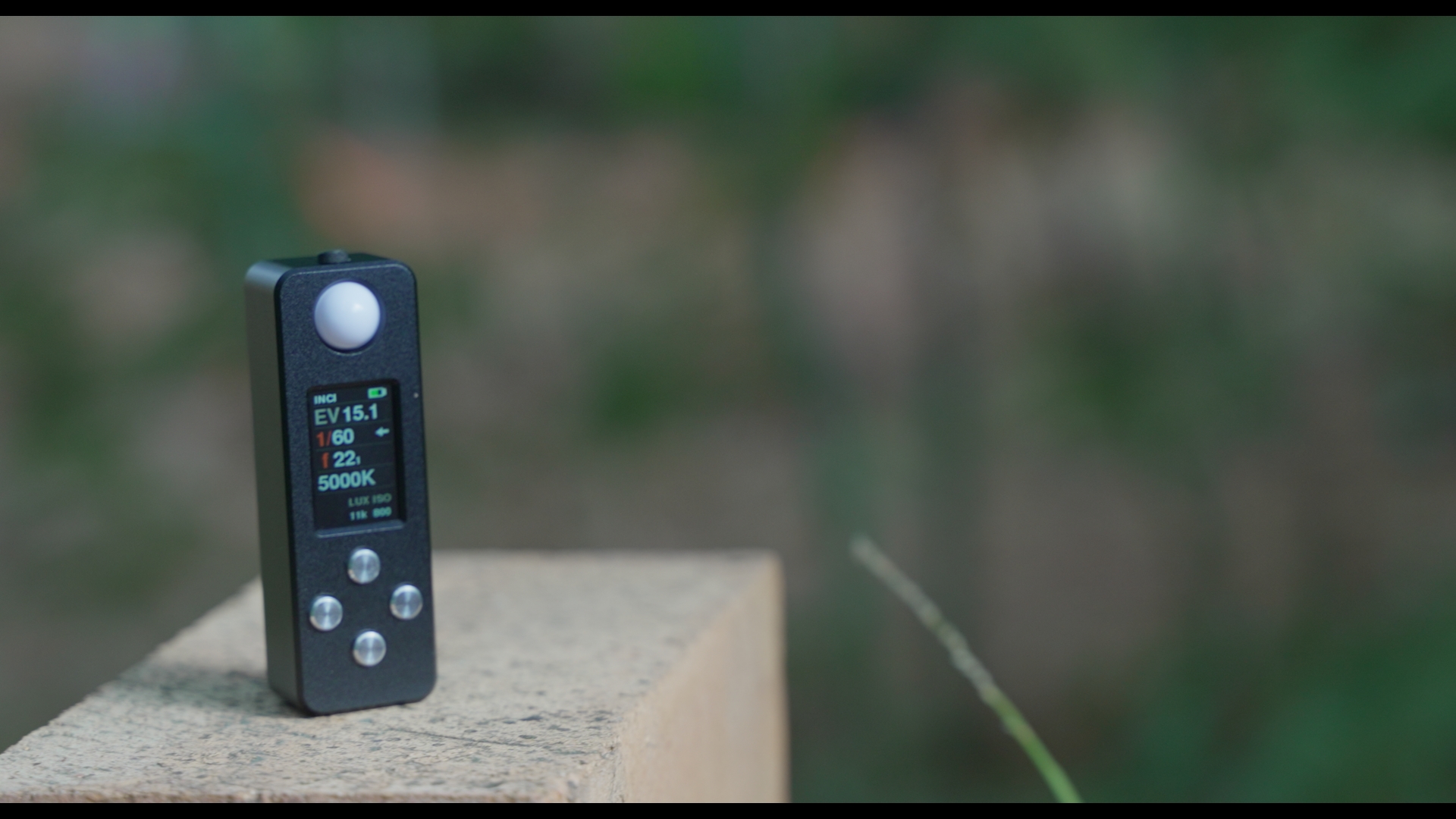
Considering all the digital exposure tools available nowadays… and the run-and-gun approach many productions require— it’s odd that a dedicated light meter is still one of those tools that industry professionals— those at the top of their game— swear by. I mean, there are a lot of obstacles to using a dedicated meter— from lack of time on set to having to carry another piece of gear around with you. What’s more, the good ones aren’t cheap. It’s easy to drop 400 bucks on a standard meter that tells you where to set your aperture and ISO (I’m looing at you, Sekonic L478). One that shows color temperature is likely to run a couple hundred more. And those that evaluate the quality of the light are nearly two grand.
That’s part of what makes the Lumo light meter quite frankly… amazing. It effortlessly overcomes most of the barriers and shortcomings of using a light meter.
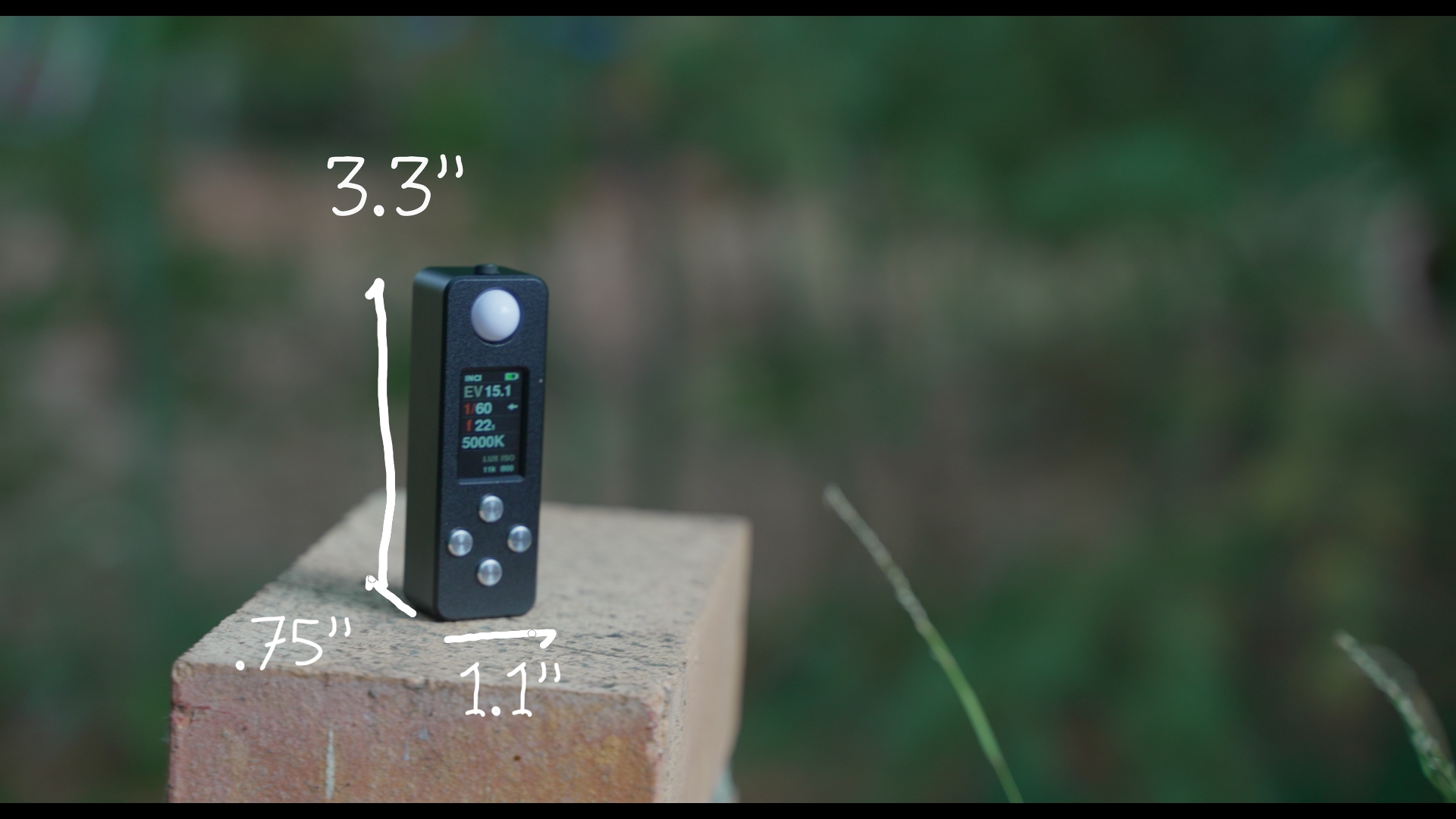
First it’s tiny, just twice the thickness and roughly the same height as a disposable lighter, which makes it easy to pack and keep in a pocket or around your neck when on location. Second, it can read the light temperature. This is one of the main reasons I wanted to upgrade my old Minolta meter. Light temperature makes it easy to find the best white balance for best results, and set it across multiple cameras that may have monitors that skew the colors one way or another. And finally, it’s remarkably inexpensive. At just 150 dollars, it can do what thousand dollar meters do, and do it better because… you may actually have it on you when you need it.
But why? Why would you need it when your camera can tell you the same information?
First, because there isn’t always a camera. Like when you’re location scouting. Or when you’re roughing out your light set-up before the talent arrives. Or when you need the exact same exposure across multiple locations. Or when you’re talking to grips and other staff who aren’t carrying a camera.
And then there are the advantages of knowing the exact color temperature of the light, for setting white balance or using multiple cameras.
Yes, you can create great work without a dedicated light meter… just like you can make great video on a wobbly tripod, a color-cast light, or 8-bits of color depth. The light meter is a tool to elevate your craft that extra three percent.
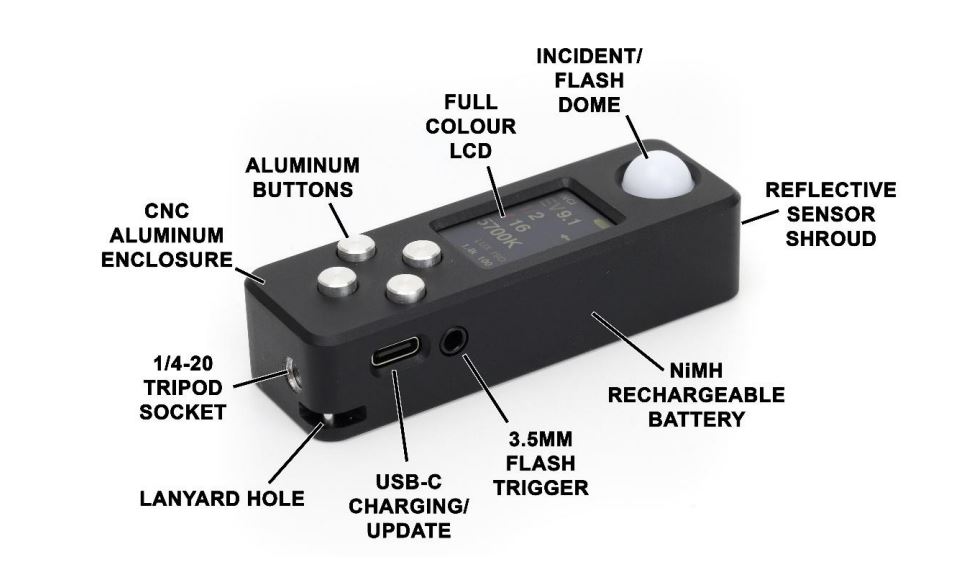
So let’s cover a few of the specifics. The Lumo measures 3.3 inches tall, by a little over one inch wide, and less than an inch thick. It’s all aluminum and feels great in the hands: very solid with the buttons click in a very satisfactory way. There’s a little bit of play… of wiggle on the buttons, which I don’t like, but it’s subtle. And perhaps unavoidable given the metal casing. It does remind you that the Lumo isn’t waterproof, so keep it out of the rain.
Lumo has printed some basic button instructions on the back, which is thoughtful. But frankly they’re a bit too much of an overview for a device that has this many functions. It also has a user replaceable battery, which is great. The color display is easy to read, even in direct sunlight.
For videographers:
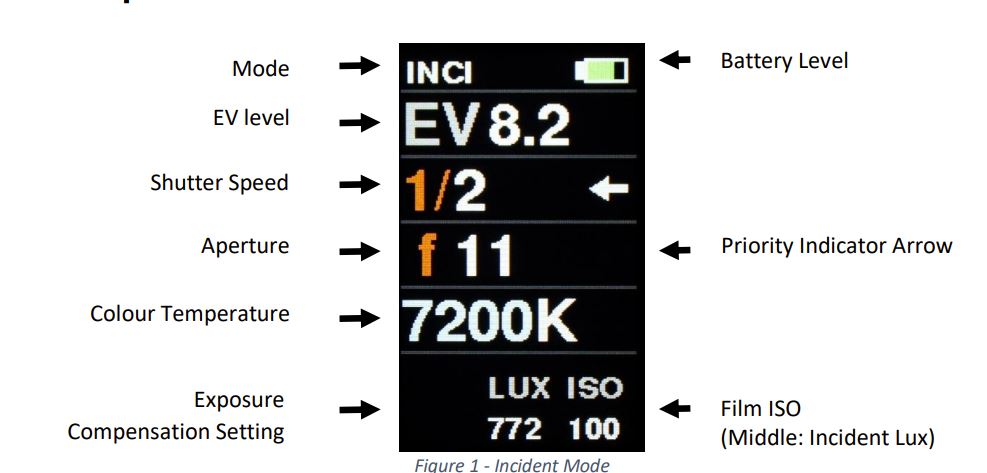
It can record incident and reflective light. Color temperature, along with the green-magenta shift. It also displays the EV and the Lux. And it has a Cine mode that calculates in terms of shutter angles and frame rates if you prefer that. You also have the ability to enter in neutral density information to compensate for the filter on your camera.
For photogragraphers:
It will capture flash exposures and display the ratio between ambient light and the flash— which is very helpful for a one shot calculation between shadow exposure and key. It can also show you how the flash itself falls off over the split second it fires.
How does it perform? Well, it’s compact form means it’s easy to have on you when you need it, and this by itself does wonders. It takes roughly two seconds to power on, and in doing so it captures the ambient light information. The exposure metering is spot on, exact, and easy to use. Surprisingly, it’s missing one feature that many other meters have: it’s missing a retractable dome. The retractable dome limits the directionality of the light being measured, making it easier to isolate things like the key and fill intensity. This isn’t a deal breaker; you often see professionals block the light using their hand (and in some respects that is a more reliable technique). But it is something you should be aware of before buying.
The color temperature meter is a little more complicated. Here, it does not perform like a traditional spectrometer, such as the $2,300 dollar Sekonic C-7000. My hope was that I would be able to walk into a space, capture the white balance of the room, and set my camera accordingly. But… that’s not how it works. The color neither mixes to one temperature, nor can you isolate each temperature by blocking the direct light source with your hand. Instead, you have to meter the light source directly. When you have a single or dominant light source, it will accurately display the Kelvin. But when the light is mixed on the subject, the result is most often incorrect. It doesn’t seem to know how to interpret different color information across the dome. If you want to know a secondary color hitting your subject, you have to meter the source.
Ten years ago I bought an old Minolta light meter used for about a hundred bucks. It displays only exposure data, not color, and I use it sporadically. I actually like using it, what it does to my creative process. I think that it’s slowing me down and making me more conscious of my decisions… but in reality it’s making me more conscious without slowing me down. The time I save tweaking exposure based on my monitor or eye makes up for the time I spend using it on set. I’d use it more if it wasn’t so big and could live on my body without getting in the way. The Lumo can live in my pocket , hip, or around my neck without getting in the way.
There are a few things I miss in this light meter. The first is a retractable dome. I know this would require a significant amount of engineering, both on the inside and the out. While you can purchase silicone cases for the Lumo (in multiple colors for the stylish), the only full case Reveni offers is an arty, handmade, leather affair for a whopping $123. The best place for a meter is really on the hip, and we’re left to
I feel almost guilty speaking so highly of the Lumo. The company is a really small outfit in Canada, and you almost get the sense they don’t want a thousand orders a month… or even two hundred. But the craftsmanship, the technical expertise, and the affordability make this… quite brilliant.
Sorry, the comment form is closed at this time.